
Custom Precision Metal Stamping Services: Progressive & Transfer Die Stamping
High-speed, tight-tolerance metal stamping for million-part production runs. Featuring high-tonnage mechanical and pneumatic presses (25 to 500 Tons), in-house progressive tooling design, and automated optical inspection to deliver micro-tolerances down to ±0.01 mm, aggressive per-part pricing, and a Lifetime Tooling Maintenance Guarantee.
- Press Tonnage: 25 to 500 Tons (Speeds up to 400 SPM)
- Precision Tolerance: Down to ±0.01 mm (0.0004”)
- Tooling Warranty: 1,000,000+ strokes with lifetime free die maintenance
- Packaging Options: Tape & Reel (SMT-ready), bulk barrel, or custom blister trays
Comprehensive Metal Stamping & Tooling Configurations
Progressive Die Stamping
A continuous coil strip feeds through multiple sequential stations (punching, coining, bending, and blanking) in a single high-speed stroke sequence. Capable of outputs up to 400 parts per minute, driving down unit labor cost to near-zero for automotive connectors and electronic shielding cans.
Transfer Die Stamping
Mechanically transferred parts move between separate die stations via automated finger bars. Ideal for medium-to-large brackets, structural frames, and automotive chassis reinforcements that cannot remain attached to a continuous strip.
Precision Deep Draw Stamping
Transforms flat metal sheet blanks into hollow circular, square, or irregular cylindrical shells with depth-to-diameter ratios exceeding 2:1. Completely eliminates welding seams on sensor enclosures, motor cans, and fluid reservoirs.
Compound Die Blanking & Fine Blanking
Executes multiple cutting and piercing operations in a single press stroke. Delivers 100% clean-shear, rollover-free edge surfaces and extreme planarity for transmission gears, clutch plates, and precision washers without secondary shaving.
Precision Metal Stamping Capabilities & Tooling Thresholds
Engineering parameters for progressive die, transfer, deep draw, and compound stamping presses.
| Stamping Parameter | Standard Production Baseline | High-Precision / Progressive Master |
|---|---|---|
| Press Tonnage Range | 45 to 200 Tons (Mechanical Crank) | 25 to 500 Tons (High-Speed & Link-Motion) |
| Press Speed (Strokes/Min) | 30 – 120 SPM | Up to 400 SPM (High-Speed Progressive Lines) |
| Dimensional Part Tolerance | ±0.05 mm (0.002”) | Down to ±0.01 mm (±0.0004”) (Precision Tooling) |
| Sheet Thickness Range | 0.5 mm – 4.0 mm | 0.05 mm (Precision Foil) up to 8.0 mm Heavy Plate |
| Maximum Strip Coil Width | Up to 400 mm Width | Up to 800 mm Width (Automated Decoiler Line) |
| Allowable Burr Height | ≤ 10% of Sheet Thickness | ≤ 5% of Material Thickness (or Micro-Deburred) |
| Tooling Life & Warranty | 300,000 Strokes (SKD11 / D2 Tool Steel) | 1,000,000+ Strokes (Tungsten Carbide Inserts) |
| In-Die Sensing & Protection | Mechanical Ejection Limit Switches | Optical Fiber Misfeed, Jam & Buckle Sensors |
| Packaging Delivery Options | Bulk Box Packing (Corrugated) | Continuous Tape & Reel (EIA-481), Cleanroom Trays |
Common Materials Optimized for Metal Stamping
Metals
Copper & Copper Alloys
Common Grades: C110, C17200, C5191/C5210
Phosphor bronze and beryllium copper provide unmatched fatigue spring retention, electrical conductivity, and corrosion resistance for stamped high-cycle electrical contacts and terminals.
Brass
Common Grades: C2600 70/30, C2680
Outstanding ductility and deep-drawing capacity; stamped into automotive lamp sockets, electrical connectors, and threaded shell sleeves.
Stainless Steel
Common Grades: 301, 304, 316L
Grade 301 full-hard provides exceptional spring temper for battery leaf springs; 304/316L offer deep-drawability for medical sensor cans and marine clips.
Carbon Steel
Common Grades: SPCE, SPCD, 1008/1010
Extra-deep drawing quality (EDDQ) steels providing smooth surface finish and uniform plastic flow for automotive mounting clips and appliance brackets.
Aluminum Alloys
Common Grades: 1100, 3003-H14, 5052-O
3003 and 5052-O offer superior formability and light weight for EV battery cell casing cans and EMI shielding enclosures.
Pre-Plated & Galvanized Steel
Common Grades: SECC
Eliminates post-stamping plating operations, lowering piece-part prices for mass-produced grounding brackets.
High-Volume Surface Finishing & Reel-to-Reel Plating

Continuous Reel-to-Reel Electroplating
Selectively plates gold, silver, or matte tin only onto the active contact area of stamped connector pins, optimizing electrical performance while drastically reducing precious metal waste.
Barrel Plating
Cost-effective bulk electrochemical barrel immersion delivering uniform anti-corrosion and solderable coatings on millions of small brackets and eyelets simultaneously.
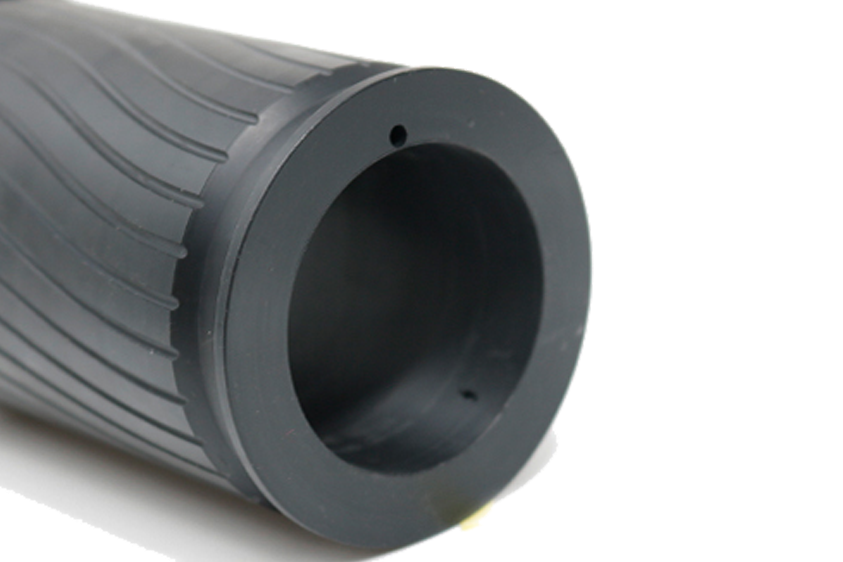
Centrifugal & Vibratory Degreasing
Multi-stage ultrasonic solvent washing removing 100% of stamping lubricants, vanishing oils, and metal fines; meets medical and cleanroom assembly standards.

Vibratory Deburring & Centrifugal Barrel Finishing
Mechanical tumbling with ceramic media to smooth sharp blanked shear burrs down to < 0.02 mm without rounding critical functional edges.

In-Line Reel-to-Reel Heat Treatment
Atmosphere-controlled continuous heat treating to impart spring temper into stamped beryllium copper contacts or hardened carbon steel clips.
High-Precision Stamped Components Across Global Sectors

Automotive & Electric Vehicles
EV battery cell connector busbars, wire harness crimp terminals, fuse holder clips, sensor brackets.

Consumer Electronics & Mobile Computing
Ultra-thin EMI/RFI shielding cans (0.15 mm thickness), USB-C connector ground shells, battery contact springs.

Renewable Energy & Smart Grid
High-current solar inverter copper busbar links, circuit breaker contact arms, grounding shunts.

Telecommunications Infrastructure
Multi-pin backplane connector sockets, fiber optic transceiver metal sleeves.

Medical Diagnostic Devices
Titanium lancet blades, disposable surgical sensor clips, hearing aid battery spring contacts.

Industrial Automation & Robotics
Precision optical encoder disk brackets, relay spring leaves, DIN-rail mounting latches.
High-Yield Volume Manufacturing: Why Sourcing Leaders Choose XR Precision
In-House Precision Toolroom & Lifetime Die Guarantee
Tooling maintenance is the #1 hidden cost in stamping. When XR Precision builds your progressive die, we guarantee its performance for the life of your product. Whether your contract runs for 500,000 or 5,000,000 cycles, all tool sharpening, punch replacements, and maintenance are 100% covered by us at zero extra cost.
Integrated In-Die Fiber Optic Protection
A single un-ejected scrap slug can destroy a $50,000 progressive die and shut down your assembly line for weeks. Our progressive dies feature embedded optical fiber misfeed sensors and acoustic tonnage monitors that stop the press stroke in milliseconds upon detecting a 0.05 mm anomaly.
Tooling Cost Amortization Programs
We offer flexible tooling amortization programs for verified volume projects: pay for the tooling upfront, and receive a dedicated per-part rebate across your first 100,000 to 500,000 parts until the entire initial tooling investment is refunded.
SMT Tape-and-Reel Packaging Readiness
For tiny electronic shielding frames and contact terminals, loose parts in bags create tangling, bending, and manual placement costs. We operate automated carrier tape packaging stations compliant with EIA-481 standards, delivering clean, oriented parts ready for high-speed pick-and-place robots.
Statistical Process Control & Continuous Stamping Metrology
High-speed stamping demands automated, continuous quality verification. XR Precision certifies tight tolerances through statistical sampling and automated in-line inspection.
Inspection Capabilities Roster
- Automated High-Speed Optical Vision Sorters: Verifies 100% of stamped contact dimensions, burr limits, and pitch distances at speeds up to 500 parts per minute.
- 2D Video Measuring Systems: Validating micro-burr heights, strip pitch lengths, and complex lead-frame profiles.
- Dynamic Micro-Hardness Testers: Ensuring spring temper and heat treatment compliance on thin spring metal strips.
- Solderability & Plating Thickness Testers: Non-destructive verification of gold/tin plating thickness to ensure zero delamination during reflow soldering.
Deliverable Quality Documents
- Complete PPAP Level 3 documentation (Control Plan, FMEA, Gage R&R, Process Flow)
- Capability Studies showing Cpk ≥ 1.67 for critical dimensions
- Full First Article Inspection (FAI) reports on T0/T1 sample approval
- Material Certification (MTR) & RoHS/REACH compliance letters
How We Work
Step 1: 3D CAD & Strip Layout Simulation
Analyzing punch tonnage, strip nesting yield, and station progression within 24 hours.
Step 2: In-House Tooling Build & T1 Sampling
Precision wire-EDM die inserts, assembly, and initial sample submission with full FAI within 3–4 weeks.
Step 3: High-Speed Serial Progressive Stamping
High-tonnage automated coil-fed stamping with in-die sensor monitoring and automatic decoiling.
Step 4: Ultrasonic Washing, Plating & Tape-and-Reel Packaging
100% degreasing, selective plating, automated reel packaging, and global JIT shipment.
Explore Complementary Sheet Metal Processes
Need rapid prototypes before committing to hard tooling, or secondary welding and assembly operations?

Low-Volume Prototypes Without Hard Tooling Costs?

Flexible Short-Run Flange & Bracket Forming?

Require Secondary Tapping, Hardware Insertion, or Deburring?
Metal Stamping FAQs
Who owns the stamping die, and what are the ongoing maintenance costs?
The customer 100% owns the stamping tooling. Once the initial tooling deposit is finalized, the die is assigned a unique asset tag and reserved exclusively for your production. Furthermore, XR Precision provides a Lifetime Tooling Maintenance Guarantee—we absorb all costs for regular punch re-sharpening, die insert maintenance, and tool wear replacements for the entire commercial life of the project.
At what production volume does progressive die stamping become more economical than laser cutting?
While laser cutting and CNC bending require zero tooling investment, their per-part machine cycle time is relatively high. Generally, the cost crossover point where progressive stamping becomes significantly cheaper occurs between 5,000 and 10,000 parts. Beyond 20,000 parts, the savings from high press speeds (hundreds of parts per minute) and tight material nesting quickly pay back the initial tooling expense.
What is the difference between a progressive die and a compound die?
A compound die performs multiple cutting operations (such as internal hole piercing and outer boundary blanking) simultaneously in a single stroke at a single station; it is ideal for extremely flat washers and circular laminations. A progressive die moves the metal strip sequentially across multiple distinct stations (cutting, bending, embossing, and detaching), making it capable of forming intricate, three-dimensional geometry in a single automated press cycle.
How do you manage and minimize stamping burrs on precision parts?
We control burrs through tight punch-to-die cutting clearances (typically engineered at 8% to 12% of material thickness per side, depending on alloy shear strength) and utilizing ultra-hard tungsten carbide cutting edges. Under normal production, burr height is kept below 5% to 8% of sheet thickness. For zero-burr specifications, we route parts through post-stamping centrifugal vibratory tumbling or electropolishing.