
Custom Precision Fiber Laser Cutting Services: Flat Sheet & Plate Blanks
High-power fiber laser cutting (up to 20kW) for tight-tolerance metal sheets, structural plates, and intricate perforated profiles. Featuring high-pressure nitrogen assist cutting to deliver 100% oxide-free, burr-free edges ready for immediate welding and powder coating, backed by algorithmic nesting for volume cost optimization.
- Cutting Tolerance: Down to ±0.05 mm (0.002”)
- Bed Dimensions: Up to 4000 × 2000 mm (13′ × 6.5′)
- Edge Quality: 100% Oxide-free, shiny cut edges with high-purity N2
- Plate Thickness: From 0.5 mm foil up to 25.0 mm heavy plate
Advanced Fiber Laser Cutting Capabilities
High-Purity Nitrogen-Assisted Clean Cutting
Utilizing 99.999% pure nitrogen as the assist gas to blow molten metal from the kerf without combustion. Eliminates the brittle carbon oxide layer found in oxygen cutting, allowing parts to move directly to powder coating or robotic TIG welding without manual edge grinding.
Dynamic Common-Line Nesting
Advanced CAD/CAM nesting algorithms interlock adjacent parts along common cutting lines. Reduces piercing cycles by 40%, maximizes sheet utilization up to 92%, and directly lowers the raw material bill for volume procurement.
Precision Small-Hole & Micro-Piercing
Equipped with dynamic focal control and high-frequency pulsed piercing, allowing clean, round holes with diameter-to-thickness ratios down to 0.8:1 without slag blowout or thermal distortion on thin webs.
Heavy Plate Cutting with Zero Edge Slag
Powered by ultra-high-wattage fiber laser sources delivering narrow kerf widths (0.2 mm) on heavy carbon steel and stainless steel up to 25 mm, maintaining edge squareness and minimal taper across deep sections.
Fiber Laser Cutting Capabilities & Engineering Specifications
Operational thresholds for high-speed sheet blanking, hole piercing, and heavy plate profiling.
| Laser Cutting Parameter | Standard Production Baseline | High-Precision / Fiber Master Grade |
|---|---|---|
| Fiber Laser Power Source | 6,000 Watts (6kW Fiber) | 15,000W – 20,000W (High-Power High-Speed) |
| Maximum Sheet Bed Size | 3000 × 1500 mm (10' × 5') | Up to 4000 × 2000 mm (Oversized Plate Bed) |
| Positional Cutting Accuracy | ±0.10 mm (0.004”) | Down to ±0.05 mm (±0.002”) |
| Repeatability | ±0.05 mm | ±0.02 mm (Linear optical encoder feedback) |
| Kerf Width (Cut Slit Width) | 0.25 mm – 0.40 mm | 0.12 mm – 0.20 mm (Micro-focus optical head) |
| Carbon / Mild Steel Max Thickness | 16.0 mm (Oxygen assist) | Up to 25.0 mm (Clean high-pressure cutting) |
| Stainless Steel Max Thickness | 12.0 mm (Nitrogen assist) | Up to 20.0 mm (100% Bright oxide-free edge) |
| Aluminum Max Thickness | 10.0 mm (Nitrogen assist) | Up to 16.0 mm (Anti-reflective fiber source) |
| Brass & Copper Max Thickness | 6.0 mm (Brass C260) | Up to 10.0 mm (Pure Copper C110 with optical isolator) |
| Min Hole Diameter to Thickness Ratio | 1 : 1 (e.g., Ø 3 mm hole in 3 mm plate) | 0.8 : 1 (Precision frequency pulse piercing) |
Common Materials Suitable for Laser Cutting
Metals
Stainless Steel
Common Grades: 304, 316L, 430
Cut using high-purity nitrogen assist gas to prevent chrome depletion and oxidation; delivers bright, mirror-like edges ready for sanitary food and pharmaceutical hardware.
Carbon Steel
Common Grades: SPCC, SPHC, A36
Oxygen assist provides rapid cutting for heavy structural base plates; high-pressure nitrogen delivers pristine edges for powder-coated chassis.
Aluminum
Common Grades: 5052-H32, 6061-T6, 3003
5052 is the premier laser-cut blank for subsequent bending without cracking; cut with optical anti-back-reflection isolators.
Galvanized Steel
Common Grades: SECC, SGCC
Pre-coated zinc steel laser-cut with optimized gas pressures to prevent excessive zinc flare-up, maintaining galvanic edge protection.
Brass & Copper
Common Grades: C260, C110
Highly reflective yellow metals cut effortlessly with our modern 15kW fiber lasers for high-current electrical busbars and decorative architectural screens.
Titanium
Common Grades: Grade 2, Grade 5
Cut with high-pressure argon or ultra-pure nitrogen to avoid interstitial hydrogen/oxygen embrittlement on aerospace bracket blanks.
Plastics
PMMA
Produces polished, flame-like clear edges for display covers and light diffuser panels.
POM
Cleanly cut into flat gaskets, washers, and timing cams without fraying.
Surface Finishing & Edge Conditioning for Laser Cut Parts

Nitrogen-Clean Cut Edge
100% shiny, scale-free edge condition ready for direct welding or primer application without secondary acid pickling.
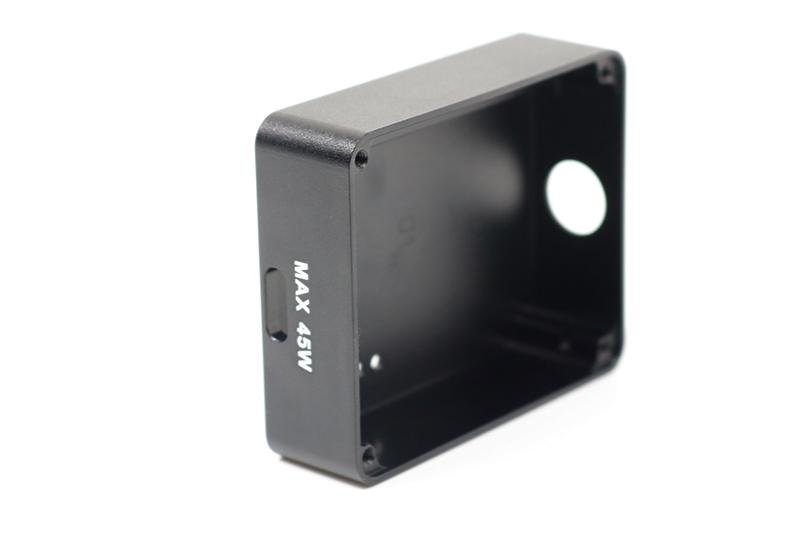
Automated Vibratory Deburring & Edge Rounding
Industrial rotary vibratory tumblers and Timesavers wet-belt machines removing razor-sharp dross and adding a safe R 0.2 mm edge radius for safe handling.
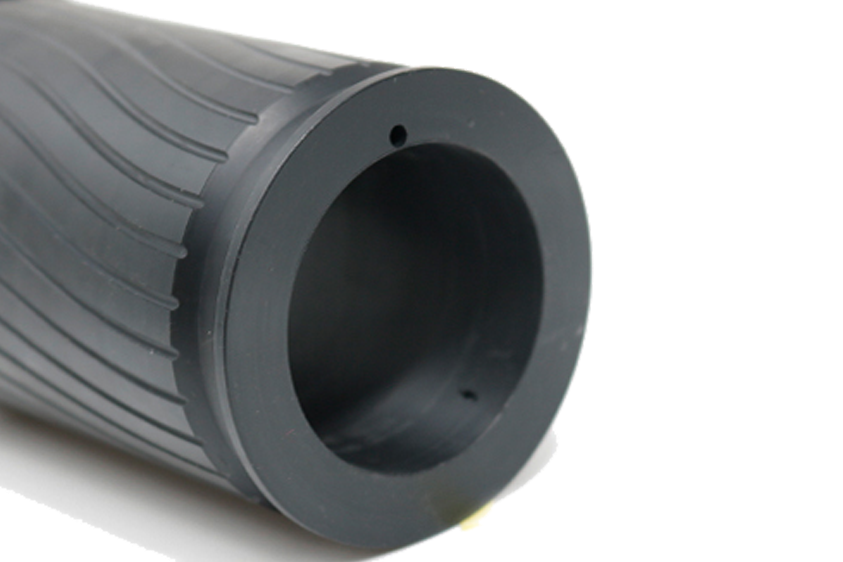
Powder Coating
Uniform, durable coating applied over laser-cut carbon steel and aluminum brackets with cross-hatch adhesion assurance.

Bead Blasting
Leaves an aesthetically clean, non-directional matte finish or linear graining (#4 finish) across stainless steel sheets.

Electrolytic Zinc Plating
Cost-effective cathodic rust prevention for mild steel bracket blanks and chassis floor plates.

Passivation
Chemical immersion for stainless steel laser blanks to dissolve free iron embedded during cutting and restore passive chrome oxide layers.
High-Precision Laser Cut Blanks Across Critical Sectors

Cloud Computing & Data Center Infrastructure
Perforated server rack front mesh covers, 1U/2U server chassis flat blanks.

EV Powertrains & Renewable Energy Storage
Laser-cut high-purity copper busbar blanks, battery pack tray reinforcement plates.

Industrial Machinery & Automation
Heavy equipment safety barrier plates, linear rail mounting shims, conveyor side skirts.

Medical & Analytical Instrumentation
Stainless steel centrifuge mounting decks, diagnostic trolley bracket blanks.

Aerospace & Commercial Aviation
Titanium exhaust heat shield blanks, avionics mounting brackets, airframe gussets.

Automotive & Heavy Transit
Suspension arm gusset plates, trailer chassis connector plates, custom brake rotor shims.
Why High-Volume Procurement Teams Source Laser Cut Blanks from XR Precision
20kW High-Speed Piercing & Slashing Cycle Times
Our ultra-high-power fiber lasers achieve rapid "flying pierce" technology in under 0.05 seconds, cutting through thin sheets at speeds exceeding 40 meters per minute. We cut your cycle time in half compared to conventional 4kW shops, directly reducing piece-part costs.
Advanced Dynamic Common-Line Nesting
Raw sheet metal is priced by weight. Our CAM software interlocks irregular flat patterns and executes "common-line cutting," where a single laser pass cuts the edge of two adjacent parts simultaneously. This reduces cutting gas consumption by 30% and trims sheet scrap by up to 25%.
100% Dual-Shuttle Automation
Loading and unloading heavy metal plates causes massive production downtime. Our laser cells operate with dual-pallet hydraulic shuttle tables that swap 4000 × 2000 mm sheets in under 15 seconds while the laser cuts non-stop.
Seamless Downstream Bending & Stamping Integration
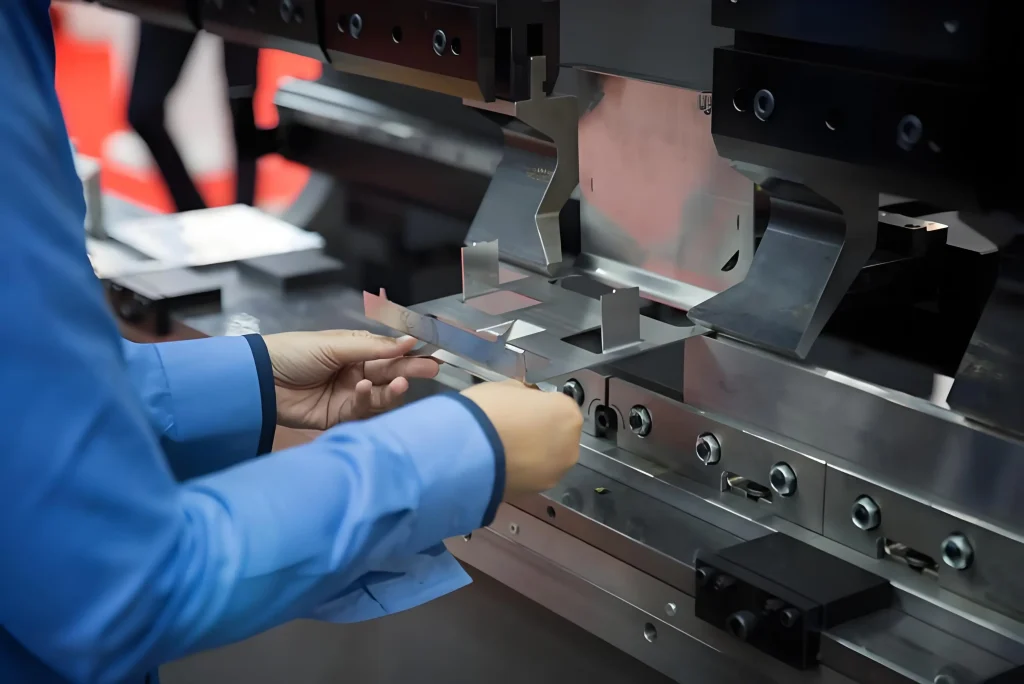
Avoid the logistics hassle of buying laser blanks from one vendor and shipping them to a bending shop. We program precise bend deduction notches directly into the laser DXF cutouts, ensuring your blanks fold with micron accuracy on our press brakes.
Precision Flat-Pattern Metrology & Inspection
Precision forming begins with flat accuracy. A laser-cut blank with dimensional drift causes ruined bend flanges downstream. XR Precision certifies every nest before it moves to forming.
Metrology Equipment Roster
- 2D Laser Scanning Inspection Tables: Projects laser beams across full 3000 × 1500 mm flat parts, capturing 100% of hole diameters, pitch positions, and perimeter contours in under 20 seconds, verifying tolerances to within ±0.03 mm.
- Optical Comparator & Video Measuring Systems (VMS): Microscopic inspection of hole roundness, micro-tabs, and edge taper.
- Digital Coating Thickness & Roughness Gauges: Verifying surface roughness and powder coating adhesion.
Deliverable Quality Documents
- 100% Dimensional First Article Inspection (FAI) reports on initial laser nests
- Raw Material Mill Test Reports (MTR / Mill Certs) with heat number tracking
- Certificate of Conformance (CoC)
How We Work
Step 1: DXF/DWG Vector File Review
Upload your 1:1 flat patterns or 3D STEP models. We conduct automated hole-size and kerf-clearance checks within 12 hours.
Step 2: Automated High-Yield Nesting
CAM software optimizes sheet yield, cutting lead-ins, and micro-tab joints to prevent small part tilt-up.
Step 3: High-Power Fiber Laser Cutting
Cutting under continuous high-pressure nitrogen gas with automated height-sensing collision protection.
Step 4: Vibratory Deburring & Interleaved Pallet Packaging
Automated edge deburring, cardboard/foam interleaved stacking to prevent scratches, and ocean/air export crating.
Explore Complementary Sheet Metal Processes
Moving beyond 2D flat patterns? Discover our integrated forming, joining, and volume production capabilities:

Need 3D Structural Flanges or Formed Channels?

Need Pressed Hardware, Tapping, or Deburring?

Scaling to 10,000+ Pcs with Lowest Unit Cost?
Laser Cutting FAQs
Why is Nitrogen assist cutting superior to Oxygen for steel and aluminum?
Oxygen assist relies on an exothermic combustion reaction that leaves a brittle carbon oxide film along the cut edge. This oxide layer causes powder coat paint to peel and weakens TIG/MIG welds unless manually ground off. Nitrogen is an inert shielding gas that simply blows molten metal away, leaving an oxide-free, shiny metallic surface that is 100% ready for paint or welding with zero pre-treatment.
What is the minimum hole size you can laser cut reliably?
As a standard manufacturing guideline, the minimum hole diameter should be equal to the material thickness (1:1 ratio). However, on our high-power fiber lasers equipped with micro-pulse frequency piercing, we can consistently cut holes down to 0.8× material thickness (e.g., a Ø 2.4 mm hole in 3.0 mm steel plate) with clean, perpendicular hole walls.
What are micro-tabs, and will they leave a burr on my finished part?
Micro-tabs (or shakeout tabs) are tiny bridges of metal (typically 0.2 to 0.4 mm wide) programmed to keep small cut parts connected to the skeleton sheet so they don’t tip into the machine slat bed. We use specialized micro-tab geometry that snaps off cleanly by hand, followed by automated vibratory deburring to leave a completely smooth, imperceptible edge.
What file formats are best for quoting laser cut parts?
We strongly recommend native 2D .DXF or .DWG files drawn at a 1:1 scale, with all text annotations and title blocks removed. If your project involves downstream bending, please also supply a 3D .STEP file and a 2D PDF drawing indicating critical tolerances.