
Custom Precision Sheet Metal Fabrication Services: Prototypes to Mass Production
End-to-end precision sheet metal manufacturing integrating high-power fiber laser cutting, CNC press brake bending, certified robotic welding, precision benching, and volume stamping. Delivering tight tolerances down to ±0.1 mm, certified weld integrity, and turnkey surface coating for industrial enclosures, brackets, and structural frames.
- Cutting Precision: Fiber laser tolerances down to ±0.05 mm (0.002”)
- Bending Accuracy: Angle control within ±0.5° with dynamic laser crowning
- Assembly Ready: Automated PEM hardware insertion & turnkey powder coating
- Scalable Output: 1-piece rapid prototypes to 100,000+ stamped volume runs
Integrated Precision Sheet Metal Capabilities
From simple flat-pattern brackets to complex multi-part welded electronic enclosures, our specialized fabrication cells handle every step of the transformation process under one roof.
Precision Fiber Laser Cutting
High-speed 12kW–20kW fiber laser cutting with clean nitrogen assist gas for burr-free, oxidation-free edges across carbon steel, stainless steel, aluminum, and brass up to 25 mm thick.
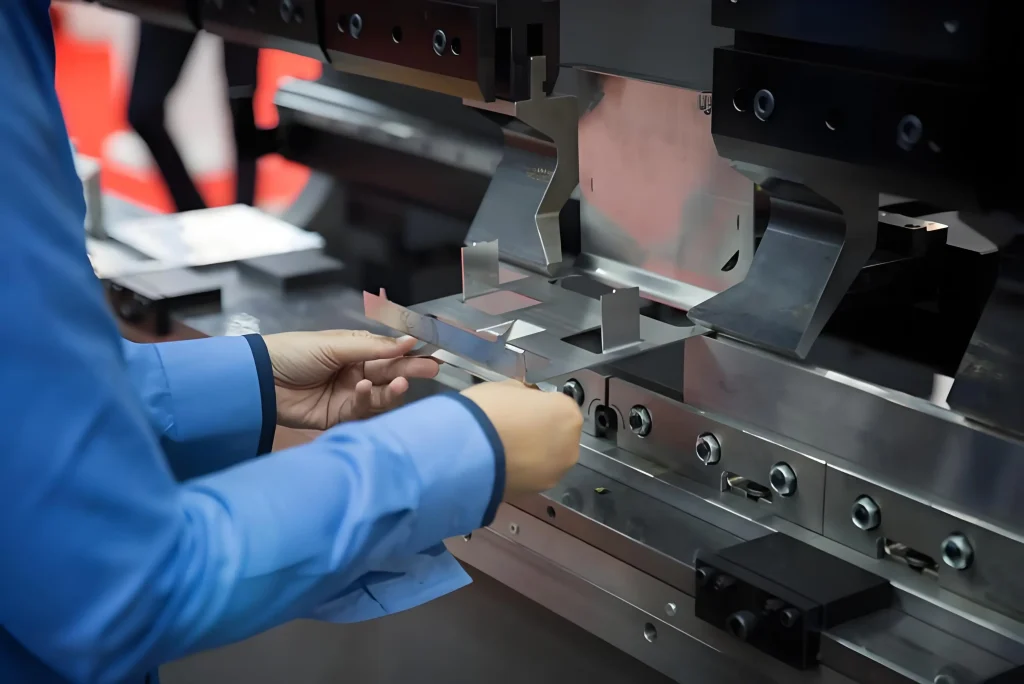
CNC Metal Bending & Forming
Multi-axis CNC press brakes (up to 250 tons) equipped with hydraulic crowning compensation and laser angle-sensing systems, guaranteeing accurate air-bending across long spans up to 3200 mm.
Certified Metal Welding
TIG (GTAW), MIG (GMAW), robotic seam welding, and resistance spot welding compliant with AWS D1.1/D1.2 standards. Delivering leak-tight pressure seams and cosmetic ground corners.
Metal Benching & Surface Finishing
Post-cutting hand craftsmanship including automated vibratory deburring, Timesavers line-graining, precision thread tapping, edge rounding, and stud/nut PEM hardware insertion.
Precision Metal Stamping
High-speed mechanical and hydraulic stamping presses ranging from 25 to 500 tons. Utilizing progressive dies, transfer tooling, and compound dies for ultra-cost-effective mass production runs.
Sheet Metal Fabrication Capabilities & Tolerances
Manufacturing limits for laser cutting, CNC bending, robotic welding, and stamping operations.
| Fabrication Parameter | Standard Sheet Metal Baseline | High-Precision / Custom Grade |
|---|---|---|
| Laser Cutting Accuracy | ±0.15 mm (0.006”) | Down to ±0.05 mm (±0.002”) (High-Speed Fiber) |
| Bending Angle Accuracy | ±1.0° (Manual press brake setup) | ±0.5° (Dynamic Laser Angle Compensation) |
| Hole-to-Bend / Edge Tolerance | ±0.25 mm (0.010”) | ±0.10 mm (0.004”) |
| Maximum Sheet Bed Size | 3000 × 1500 mm (10' × 5') | Up to 4000 × 2000 mm (Large format fiber laser) |
| Sheet Thickness Range | 0.8 mm – 12.0 mm | 0.5 mm Foil up to 25.0 mm Heavy Plate |
| Bending Bed Length & Tonnage | Up to 2500 mm (100 Tons) | Up to 3200 mm Length (250 Ton Tandem Brakes) |
| Welding Standards & Testing | AWS D1.1 (Visual Inspection) | AWS D1.2 (Aluminum) / Dye Penetrant & Leak Pressure Testing |
| Hardware / Fastener Insertion | Manual PEM Arbor Press | Automated Feed Haeger Press (Studs, Standoffs, Nuts M2–M10) |
| Production Scalability | 1 – 20 pcs (Engineering Prototyping) | 100,000+ pcs/month (Progressive Stamping Tooling) |
Material Library for Sheet Metal Manufacturing
Sheet metal forming relies on the plasticity, yield, and elongation of metals (Ductility & Elongation). Although engineering plastics cannot be “cold-formed,” they are indispensable inside enclosures. Here, we present a highly specialized material classification for purchasers:
Metals
Aluminum Sheets
Common Grades: 5052-H32, 6061-T6, 3003
5052-H32 is the undisputed industry standard for cold bending without corner cracking; 6061-T6 offers superior structural rigidity for brackets (requires larger bend radii).
Copper & Brass Sheets
Common Grades: C110, C260
C110 is laser-cut and bent into heavy current busbars and grounding plates; C260 brass provides springy electrical terminal tabs.
Stainless Steel
Common Grades: 304/304L, 316/316L, 430
Superior corrosion and sanitary performance; 304 is ideal for commercial indoor cabinets; 316L is mandatory for marine and food-grade washdown enclosures.
Carbon Steel
Common Grades: CRS / SPCC, HRS / SPHC
Cold Rolled Steel provides an ultra-smooth, uniform surface ideal for high-adhesion powder coating and automotive brackets.
Galvanized & Galvannealed Steel
Common Grades: SGCC, SECC
Pre-coated zinc layer delivering cost-effective self-healing corrosion resistance for outdoor electrical junction boxes and HVAC chassis.
Titanium Sheet
Common Grades: Grade 2, Grade 5
High strength-to-weight ratio and heat resistance; hot-formed and laser-cut for aerospace heat shields and exhaust brackets.
Industrial Surface Finishing & Protective Coatings

Powder Coating
Solvent-free, highly durable textured or smooth polyester/epoxy coating available in the entire RAL color index; resistant to chips, scratches, and UV fading.
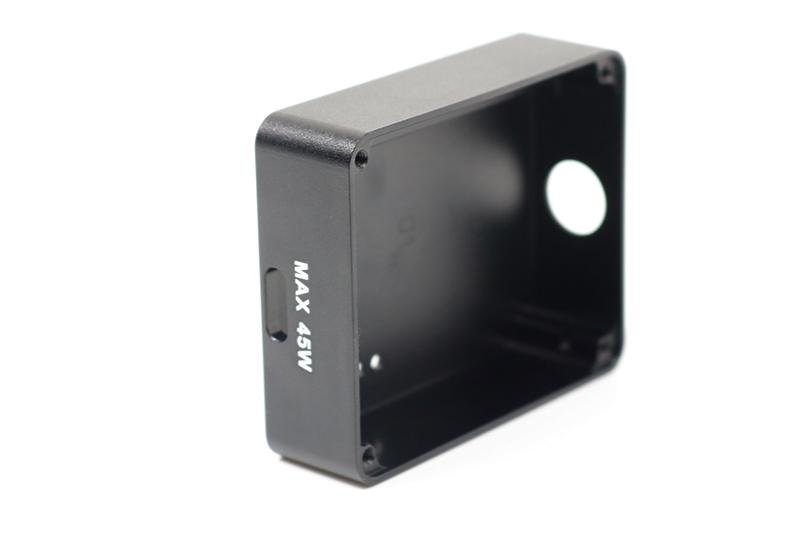
Anodizing
Electrochemical passivation for aluminum brackets and chassis in black, clear, or custom hues.
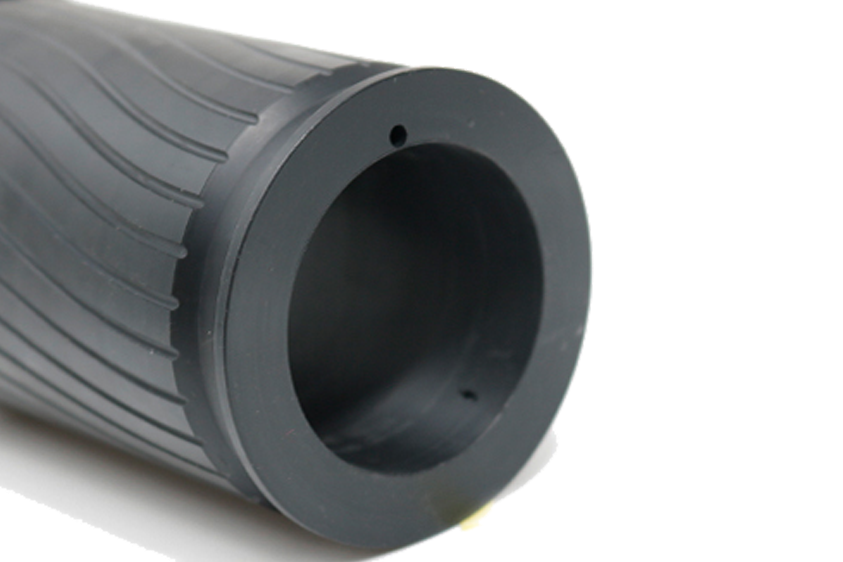
Zinc Plating & Chromate
Economical electroplated zinc (Clear, Yellow, Black) preventing rust on internal steel chassis and brackets.

Silkscreening & Laser Marking
Precision application of multi-color logos, connector port IDs, wiring schematics, and safety compliance warnings directly onto finished powder-coated surfaces.

Passivation & Grain Graining
Timesavers belt-graining producing an attractive linear brush texture (#4 finish) on stainless steel, followed by nitric/citric acid passivation.

E-Coating
100% dip-immersion coating ensuring uniform primer coverage inside complex internal box welds and hidden blind seams.
High-Precision Fabricated Assemblies Across Critical Industries

Cloud Computing & Telecom Infrastructure
19-inch 1U/2U/4U rackmount server chassis, sub-rack card cages, outdoor IP65 telecom cabinets.

Energy Storage & EV Powertrains
EV battery pack lower aluminum trays, modular energy storage enclosures, high-current copper busbars.

Medical & Diagnostic Equipment
Mobile medical diagnostic cart chassis, centrifuge metal covers, stainless surgical table brackets.

Industrial Machinery & Automation
Floor-standing PLC electrical control enclosures, machine safety guards, pneumatic manifold brackets.

Aerospace & Defense
Avionics cooling chassis, lightweight airframe bracket nodes, cockpit instrumentation console boxes.

Commercial & Consumer Electronics
POS kiosk terminal metal housings, smart locker sheet metal doors, audio amplifier faceplates.
Why Volume Sourcing & Engineering Teams Partner with XR Precision
Algorithmic Sheet Nesting for Cost Down
Raw sheet material accounts for up to 65% of sheet metal fabrication expenses. Our dynamic nesting CAM software interlocks irregular brackets across full 3000 × 1500 mm sheets, minimizing scrap skeleton loss and passing savings directly to your volume purchase price.
Automated PEM Hardware Insertion
Hand-pressing nuts and studs leads to missed hardware and misaligned threads. We utilize automated bowl-fed Haeger insertion machines with built-in force sensors, guaranteeing every standoff, nut, and stud is seated to correct torque and pull-out specifications.
Precision Bending K-Factor Database
The greatest risk in sheet metal sourcing is flange growth and hole deformation during bending. We maintain a verified empirical K-factor database for every material grade and sheet thickness, eliminating prototype trial-and-error delays.
Seamless Prototype-to-Stamping Scalability
Begin your validation phase with rapid laser-cut and CNC-bent prototypes (1–50 units). When your volume hits tens of thousands, we transition your parts to dedicated in-house progressive stamping dies to slash unit costs by up to 70%.
Certified Metrology for Complex Sheet Metal Assemblies
Precision enclosures demand total dimensional stability to ensure circuit boards and mating doors align effortlessly. XR Precision certifies fabrication tolerances through rigorous inspection.
Metrology Equipment Roster
- 2D Laser Scanning Inspection Tables: Rapid 100% verification of flat-pattern laser cutouts, hole pitch dimensions, and overall profile within seconds.
- Coordinate Measuring Machines (Zeiss CMM): Validating 3D true position of welded studs, hinge alignments, and diagonal squareness of multi-bend boxes.
- Digital Coating Thickness Gauges: Verifying powder coat mil-spec dry film thickness (DFT 60–100 μm) and cross-hatch adhesion testing (ASTM D3359).
- Weld Integrity Testing: Dye-penetrant inspection (DPI) and submerged pneumatic bubble leak testing for watertight enclosures.
Deliverable Quality Documents
- AS9102 / First Article Inspection (FAI) reports on initial production runs
- Raw Material Mill Test Reports (MTR / Mill Certs) confirming tensile strength & alloy composition
- Powder Coating / Plating Thickness & Salt Spray Test (ASTM B117) Certifications
How We Work
We machine over 50 industrial-grade metals and engineering plastics, with material certification (MTR) provided upon request.
Step 1: 3D CAD & Sheet Metal DFM Review
We analyze bend radii, hole clearances, and corner reliefs within 12 hours.
Step 2: Laser Cutting & Progressive Forming
Fiber laser flat-pattern profiling followed by multi-axis CNC bending or progressive stamping.
Step 3: Hardware Insertion, Welding & Finishing
Automated PEM nut pressing, robotic seam welding, grinding, and in-house powder coating.
Step 4: Box Assembly & Protective Pallet Packaging
Full assembly of hinges, gaskets, and viewing windows, packed in shockproof corner-padded ocean/air crates.
Explore Alternative & Complementary Machining Processes
Not sure if milling is optimal for your design? Consider these processes:

Need Cylindrical or Concentric Features?

Need Organic Curvatures or Complex Undercuts?

Hardened Metals or Sharp Square Corners?
Sheet Metal Fabrication FAQs
How far must holes be from a bend line to prevent deformation?
As a general engineering rule of thumb, the edge of a hole should be at least 2 times the sheet thickness plus the inside bend radius (2T + R) away from the bend tangent line. Placing holes closer can cause them to stretch into an ellipse during press brake forming.
What is the standard minimum inside bend radius for sheet metal?
For ductile alloys like Aluminum 5052-H32 and Cold Rolled Steel, the minimum inside bend radius is typically equal to 1× material thickness (1T). For stiffer alloys such as Aluminum 6061-T6 or 304 Stainless Steel, we recommend 1.5T to 2T to prevent microscopic stress fractures along the exterior bend grain.
What 3D/2D file formats do you require for sheet metal quoting?
We prefer 3D CAD models in .STEP (.stp) format representing the final bent geometry. To speed up programming, providing a 1:1 2D flat pattern in .DXF or .DWG alongside a fully dimensioned 2D PDF drawing with hardware callouts will significantly expedite quotation.
Can you provide fully assembled sheet metal cabinets with hinges and latches?
Absolutely. Beyond raw fabricated metal, we provide complete electro-mechanical box-build assembly: installing quarter-turn latches, piano hinges, EMI/RFI shielding gaskets, grounding studs, and transparent acrylic doors so your product arrives ready for field installation.